
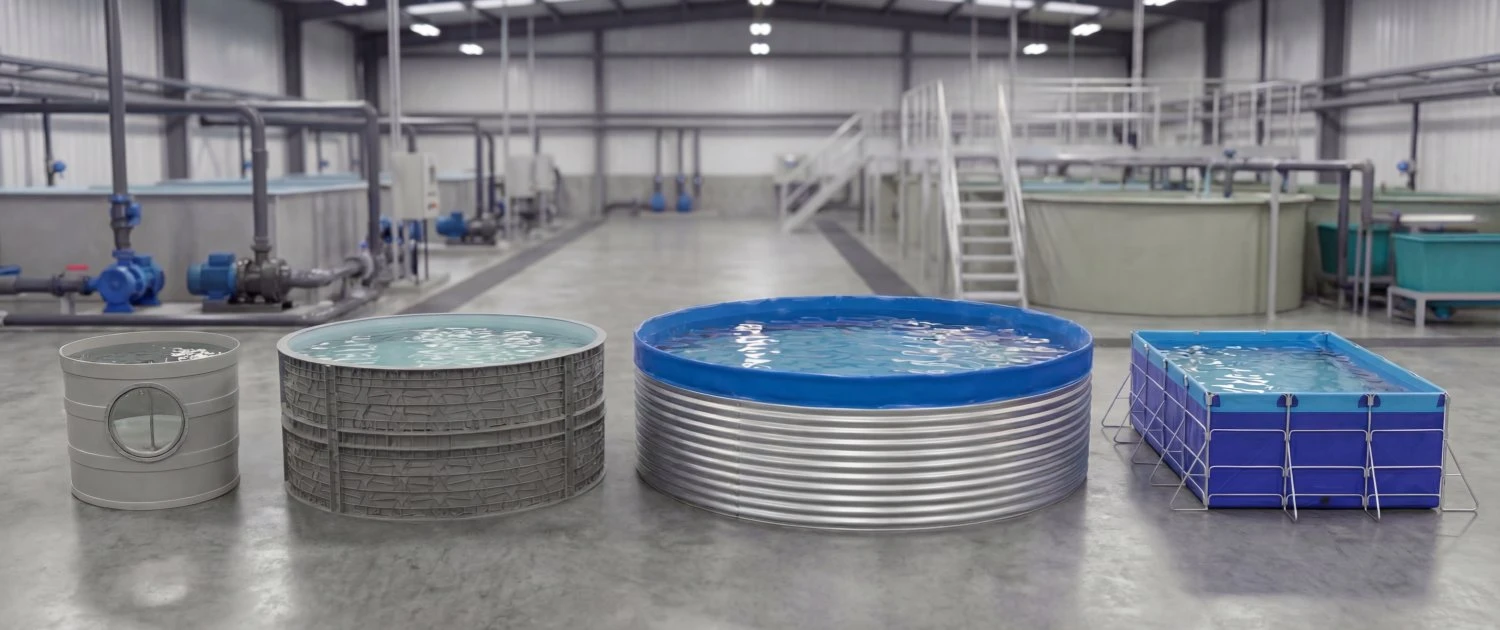
Features of Commercial Aquaculture Tanks
An aquaculture tank is the basic unit for storing fish, shrimp, or other aquatic organisms.
In large-scale commercial projects, aquaculture water tanks need to be designed with durability, ease of management, ease of construction, and ease of transportation in mind.
We offer four types of aquaculture tanks for you to choose from: Poly aquaculture tanks, Modular aquaculture tanks (a perfect alternative to fiberglass aquaculture tanks), Rectangular aquaculture tanks, and Galvanized steel tarpaulin tanks. Suitable for different aquaculture scales and stages.
Please contact us to find the most suitable solution for you.
Choose your tank Durable aquaculture tank
The typical ROI cycle for an aquaculture farm is 1-3 years.
Therefore, aquaculture tanks should be selected with a lifespan of 6-15 years.
Easy Installation
The simple installation of aquaculture water tanks reduces investment costs. Overly complex installation methods increase the installation cost of the auqauclture system and the difficulty of daily management.
Easy to transport
Commercial aquaculture projects typically require a dozen or more aquaculture water tanks. The tank design needs to take into account the volume of the transport packaging to reduce transportation difficulty and costs.
Easy Management
Aquaculture water tanks need to be designed with wastewater discharge and cleaning in mind.
The focus may differ between fish farming water tanks and shrimp farming water tanks, but both require wastewater discharge functionality and ease of maintenance.
Commercial Aquaculture Tanks For Sale
Galvanized Steel Stock Tarpaulin Aquaculture Tanks
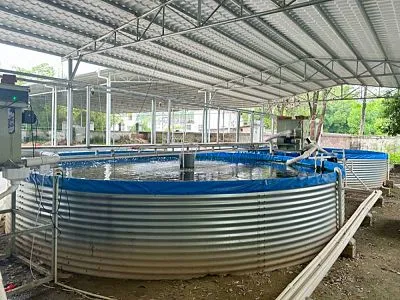
The most popular choice for commercial large-scale fish and shrimp farms. Simple to install and easy to maintain, it is especially suitable for raising high-yield, economically viable aquatic species such as tilapia, catfish, carp, trout, and freshwater shrimp.
Furthermore, it is the best choice for storage tanks in aquaculture farm water supply systems.
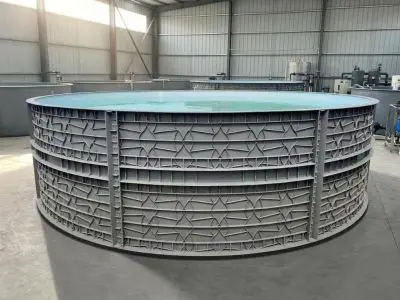
Modular PP Tanks | The best alternative to Fiberglass Aquaculture Tanks
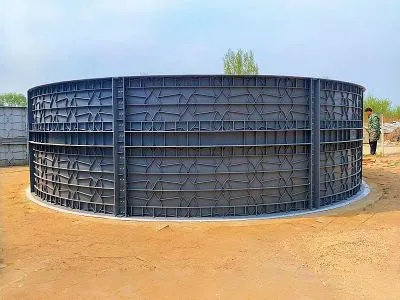
Fiberglass aquaculture tanks and PP tanks are the preferred choice for many high-end aquaculture projects, such as Ras aquaculture or aquaponics projects.
Fiberglass aquaculture tanks exceeding 3m in diameter are difficult to manufacture and have large transport dimensions.
In modern land-based aquaculture, 6-8m tanks are suitable for most situations.
Therefore, we designed and manufactured a complete set of molds based on this requirement.
This allows for modular transport and installation of PP aquaculture tanks.
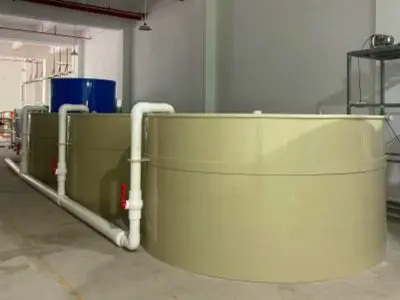
Poly Aquaculture Tanks | One of the best choices for intelligent aquaculture
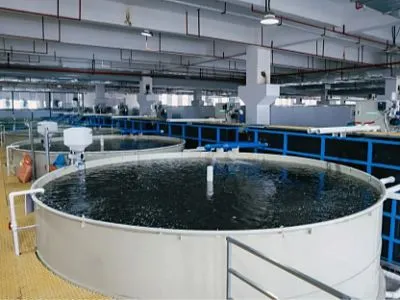
Poly aquaculture tanks are made by cutting and welding polyethylene sheets.
Because polyethylene sheets are corrosion-resistant and have a smooth surface, they are ideal for growing fish and shrimp.
Furthermore, the shape and size can be flexibly customized; the tank’s diameter, height, etc., can be tailored to your building’s dimensions.
This provides more options for land-based aquaculture tanks.
Rectangular Aquaculture Tanks
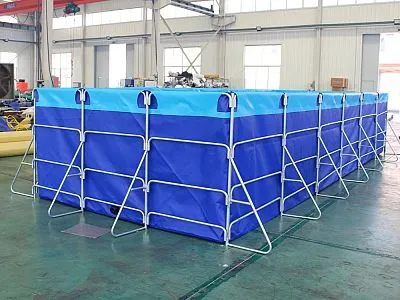
Poly aquaculture tanks are made by cutting and welding polyethylene sheets.
Because polyethylene sheets are corrosion-resistant and have a smooth surface, they are ideal for growing fish and shrimp.
Furthermore, the shape and size can be flexibly customized; the tank’s diameter, height, etc., can be tailored to your building’s dimensions.
This provides more options for land-based aquaculture tanks.
How to Choose Commercial Fish Farming Tanks?
Choosing aquaculture fish tanks
is fundamental to commercial fish farming, and the following factors can be considered when making a selection.
Contact us for support* Select according to size.
* Select according to the design of the aquaculture system.
* Select according to the aquaculture species.
* Select according to the price of the fish farming tank.
What are the key elements of Fish Farming Tank design?
Fish Farming Tanks Size Selection
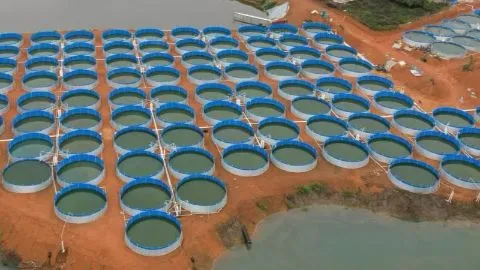
In flow-through aquaculture systems, there is usually sufficient water and ample space. Moreover, local government policies typically do not strictly regulate wastewater discharge.
✅ 10-16m.However, the stock density per unit area is lower compared to RAS aquaculture systems. We recommend using fish farming tanks with a diameter of 8-16m to increase fish yield.
✅8-12m.If you are using an aeration system, we recommend 8-12m fish farming tanks. Adding an aeration system can increase yield by 40-50%, but we need to consider wastewater discharge and water replenishment more carefully.
Learn more 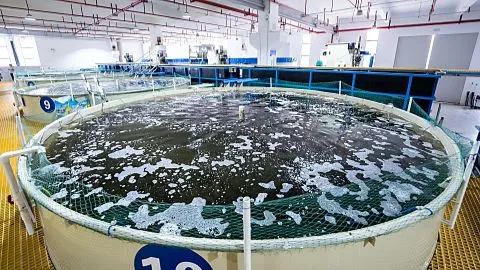
In RAS aquaculture systems, water shortages and site limitations are common. Furthermore, local government policies often impose strict regulations on wastewater discharge.
✅ 5-8m.We recommend using fish farming tanks with a diameter of 5-8 meters to improve wastewater collection and treatment capacity.
✅ 3-6m.If you are raising high-value fish, we recommend tanks of 3-6 meters, as smaller tanks result in higher filtration efficiency. Also, RAS systems typically use pure oxygen, so there is no significant reduction in yield.
Learn more 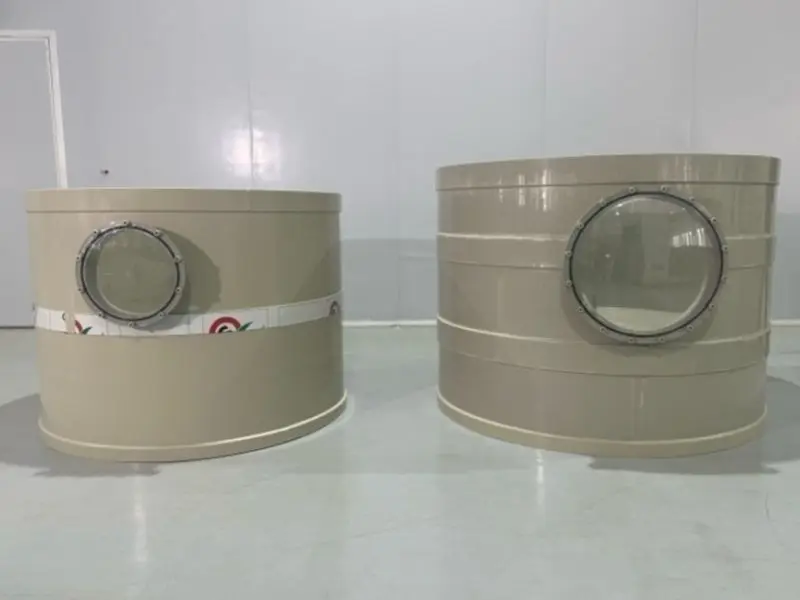
Selection of pilot and experimental projects – aquaculture tank with window
Pilot projects recommend using fish farming tanks with a diameter of 1.5-2.2m.
Tanks of this size can be directly integrated with a wastewater system and observation windows.
The pre-installed wastewater system is convenient for on-site use and requires almost no installation; only piping needs to be installed.
The observation windows allow you to observe the fish at various stages, obtaining the data needed during the pilot phase.
Learn more How to select tilapia fish farming tanks or other fish species
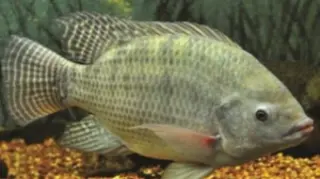
Tilapia
※ Tilapia is a fish species recommended for aquaculture by the Food and Agriculture Organization of the United Nations (FAO). It is highly adaptable and has low requirements for water quality.
- For tilapia fish farming, a diameter of 6-10 meters for an aquaculture fish tank is recommended to increase yield.
- An aeration system is also recommended to enhance the yield per tank.
- For outdoor flow-through tilapia aquaculture systems, a 6-10 meter galvanized steel tarpaulin stock tank is recommended.
- For RAS tilapia farming systems, a 6-8 meter galvanized steel tarpaulin fish farming tank tank or a modular PP tank is recommended to reduce costs.
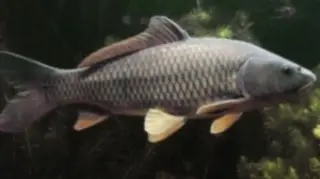
Carp
※ Similarly, Catfish and Carp are also not demanding in terms of water quality, so a 10-16 meter diameter galvanized steel fish farming tank is more recommended.
- African catfish are primarily used as feeder fish for other species and have low economic value; therefore, tarpaulin fish tanks are recommended to reduce investment costs.
- Carp prices and farming practices vary from country to country; we suggest selecting 8-12m galvanized steel tarpaulin stock tanks based on site conditions.
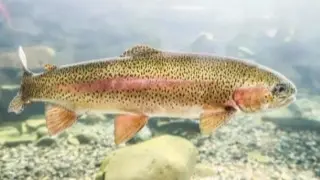
Trout
※ For cold-water fish such as Trout, a 6-8 meter aquaculture fish tank is recommended for easier water temperature management.
- We recommend using galvanized steel fish farming tanks or modular PP aquaculture fish tanks.
- For simple outdoor trout farming systems, we recommend galvanized steel tarpaulin stock tanks, which are common in Romania, Poland, and northern China.
- For indoor RAS systems, we recommend 6m modular PP aquaculture fish tanks for more precise management.
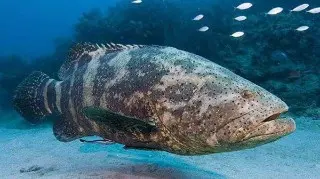
Grouper
※ High-value fish species such as salmon, grouper, and largemouth bass require more meticulous management.
- Modular PP aquaculture fish tanks or custom-made PP aquaculture fish tanks are recommended.
- These high-value fish are generally cultured in saltwater; other types of fish tanks, such as galvanized fish farming tanks, will be corroded by saltwater.
- You can have a custom-made PP aquaculture fish tank tailored to your site dimensions and system design.
- Alternatively, choose a modular PP tank for quick installation and project start-up.
Choose the aquaculture fish tanks that suit your business based on the fish farming tank price.
The price of aquaculture tanks for fish farming consists of the product’s production cost, transportation cost, installation cost, and daily management cost.
Different aquaculture projects require different considerations, and many people only look at the product’s production cost. However, it’s essential to consider all these factors comprehensively to select the aquaculture tank best suited to your aquaculture system.

Production Cost
Transportation Cost
Installation Cost
Management Cost
Commercial Fish Farming Tanks for Sale
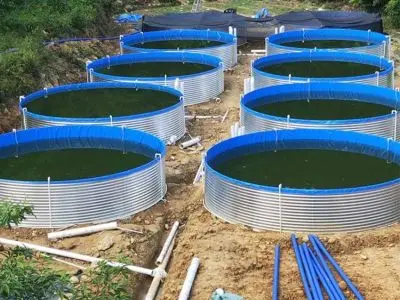
Galvanized Steel Tarpaulin Fish Farming Tank
Enquiry Now View DetailsEXW Price Range: $150 to $1,900/Set

Production Cost
Transportation Cost

Installation Cost
Management Cost
Plastic tanks for fish farming typically use a galvanized steel frame for support and tarpaulin for a waterproof lining.
- Production cost: Relatively low.
- Product delivery: Can be disassembled and stacked for delivery, taking up very little space.
- Installation difficulty: Very easy to install; 2-3 people can complete the installation.
- Site preparation: Only requires level and firm ground.
- Daily management: Requires simple maintenance; only the galvanized steel frame needs maintenance every 6-12 months.
- Disadvantages: Not suitable for marine aquaculture.
Suitable for large-scale aquaculture projects or low-investment pilot projects.
Production Cost

Transportation Cost
Installation Cost
Management Cost
Our PVC modular fish farming tank is a specially designed solution to address the transportation challenges of large fiberglass aquaculture tanks and the on-site welding difficulties of PP fish tanks. Furthermore, the material is corrosion-resistant PP granules, suitable for marine aquaculture.
- Production Costs: Large-scale industrial production ensures controllable costs.
- Product Shipping: Can be stacked for shipping, although it occupies a significant volume.
- Installation Difficulty: Low installation difficulty; 2-3 people can complete the installation, no professional welding required.
- Site Preparation: Only requires a level and stable site.
- Daily Management: Virtually no maintenance required.
Production Cost
Transportation Cost
Installation Cost
Management Cost
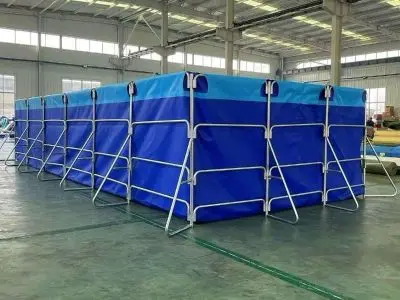
Mobile fish farming tanks are customizable in size, easy to install, and suitable for small projects or low-investment pilot projects.
- Production Costs: Low cost.
- Product Delivery: Can be stacked for delivery, taking up minimal space.
- Installation Difficulty: Easy to install; can be completed by two people.
- Site Preparation: Only requires level and firm ground.
- Daily Management: Long-term use of galvanized steel pipes requires attention to rust prevention.
Production Cost
Transportation Cost

Installation Cost
Management Cost
PP aquaculture tanks can be customized to your project size, but larger tanks require on-site welding. Suitable for RAS aquaculture projects or high-value pilot projects.
- Production Cost: Moderate cost.
- Product Shipping: Tanks will be cut to size and can be stacked for shipping, but a full container is required to protect the PP sheets.
- Installation Difficulty: Relatively high installation difficulty, requiring professional welding equipment and skilled workers.
- Site Preparation: Requires a base.
- Daily Management: Minimal maintenance required.
How to Choose Commercial Shrimp Aquaculture Tanks
* Select according to the species of shrimp being raised.
* Select according to the local climate conditions.
* Select according to the farm’s land conditions.
* Select according to the investment budget.
Choosing aquaculture tanks for Shrimp farming
The choice of tank for shrimp farming differs from that for fish farming.
You can contact us for support.
Contact us for supportWhat are the key elements of commercial shrimp farming tanks design?
Professional Aquaculture Tanks Manufacturer
TOP AQUACULTURE EQUIPMENT MANUFACTURERS IN CHINA
Are you looking for the best aquaculture tanks to enhance your fish and shrimp farming business? FutureRas, a leading aquaculture equipment manufacturer in China, is the ideal choice.
For many years, we have been deeply involved in the modern aquaculture industry. We have one R&D company and three production workshops, continuously developing new aquaculture tanks, filtration systems, aeration systems, and RAS aquaculture systems to promote environmentally friendly, sustainable, energy-efficient, and high-performance aquaculture.
Contact us today to learn more about our aquaculture tanks and help you plan your aquaculture business effectively.

Economical Pricing Options

CE SABER BV ISO9001

Excellent pre-sales and after-sales service
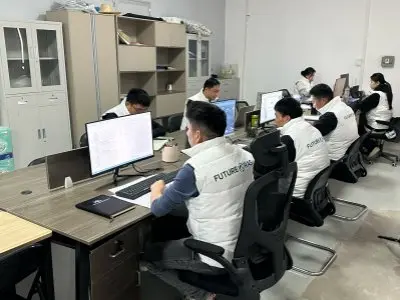
Modular PP Tank Production Line
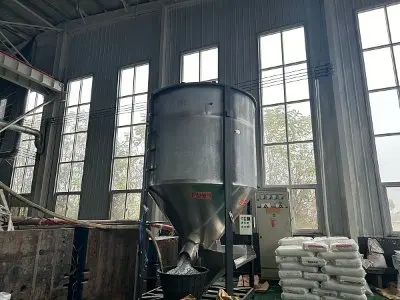
PP granule raw material mixing
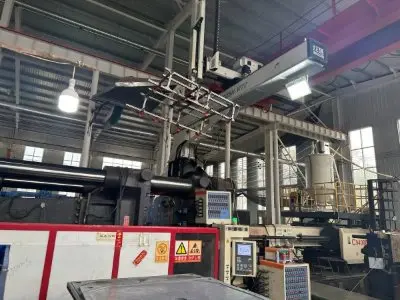
Automation control
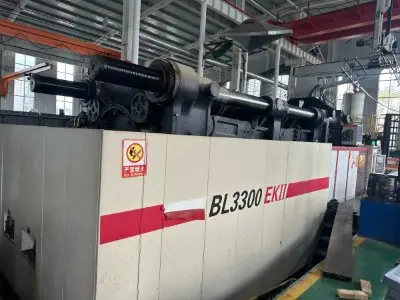
Large injection molding machine
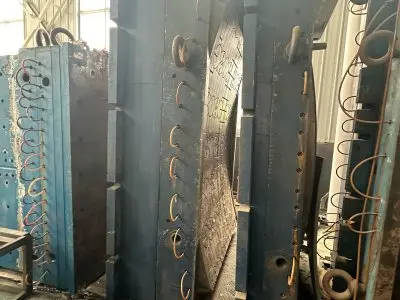
Production molds
Galvanized Steel Tarpaulin Tank Production Line
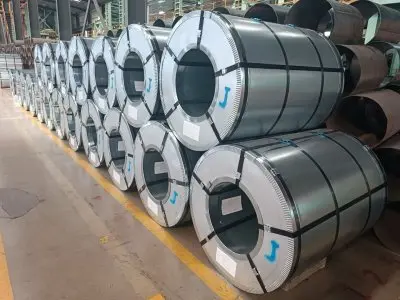
Galvanized steel sheet raw materials
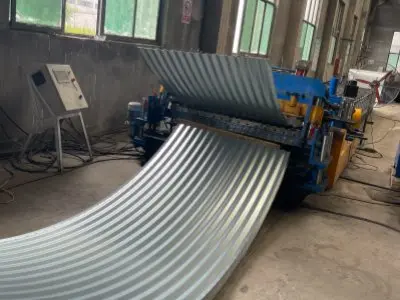
Steel plate pressing machine
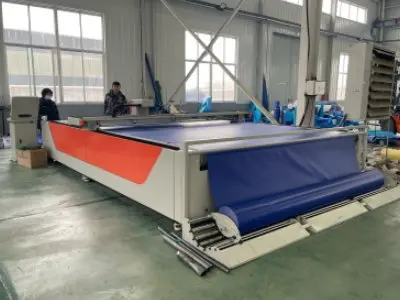
Tarpaulin automatic cropping
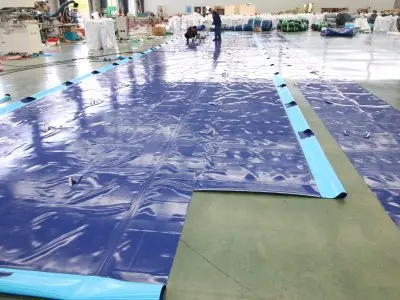
Tarpaulin liner welding
PP Tank Production Line
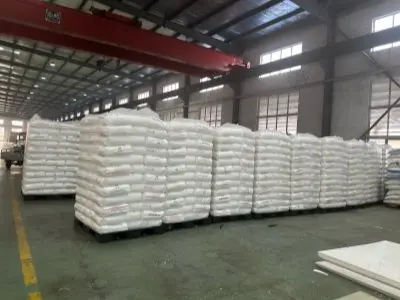
PP granule raw materials
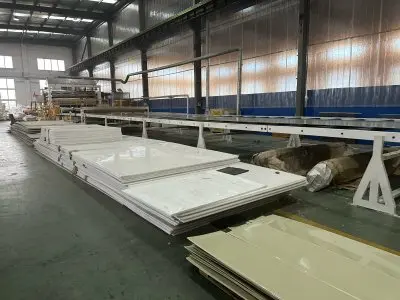
PP board production
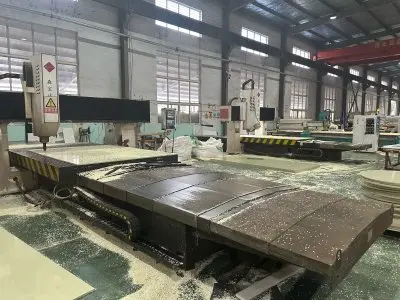
PP board cutting
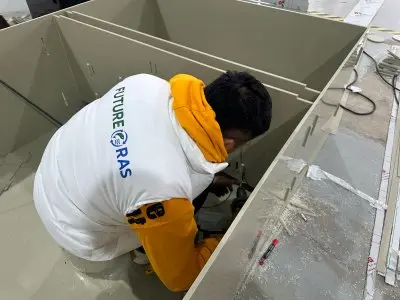
PP tank welding
Answers to Common Queries about Aquaculture Tanks
Below are some common questions about our aquaculture tanks. If you don’t find the answer you’re looking for, feel free to contact our team for detailed technical support and customized solutions.
What types of aquaculture tanks do you offer?
We offer circular and rectangular aquaculture tanks. Depending on the price, the species being farmed, and the usage conditions, you can choose from Galvanized steel tarpaulin stock tanks, Modular PP tanks, Galvanized pipe frame tarpaulin tanks, or PP tanks.
Do you accept custom tank sizes?
We have a wide range of standard models that can be used in over 95% of aquaculture projects. If you have any special requirements, please contact us.
Can you design a tank based on RAS system and flow-through systems?
Yes, in addition to tanks, we also offer aquaculture system design services. Please tell us about your site conditions. We can design the entire system.
Can you help me with the transportation of aquaculture tanks?
Yes, we can help you choose the appropriate shipping method based on the quantity.
We cooperate with freight forwarders for FCL, LCL, DDP, and air freight.
Can you provide on-site technical support?
Yes, we have many aquaculture projects overseas, and we can send engineers to the site for a fee to help you solve various problems such as design, installation, commissioning, and maintenance.