

We Provide Types of Aerators In Aquaculture
Regenerative blower for aquaculture: The most widely used aquaculture aerators

Ring blowers are easy to install, requiring no complex piping design or construction.
They are the most common type of air pump for fish and shrimp farming.
Roots blower for aquaculture: Heavy-duty air blower for large-scale fish and shrimp farming

Roots blower features a large aeration volume, and pressure can vary with water depth; it is the best choice for large-scale fish and shrimp farming.
Oxygen Generator Aquaculture: The first choice for high dissolved oxygen requirements

Onsite oxygen generators are one of the best choices for RAS systems, high-density aquaculture, and high-value aquaculture species.
Aeration diffuser accessories
Suitable for Air blower system

Disc-shaped air diffuser

Nanotube air diffuser
Suitable for Oxygen generator system
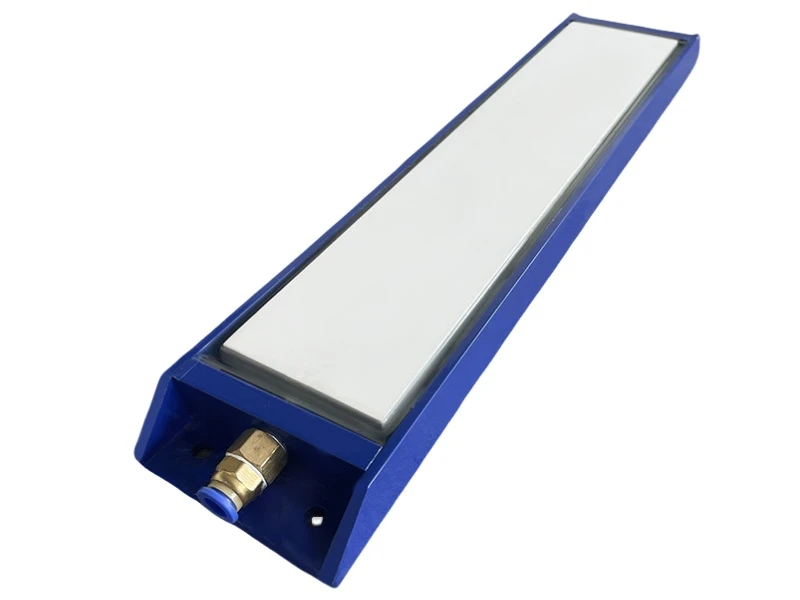
Nano-ceramic disk diffuser
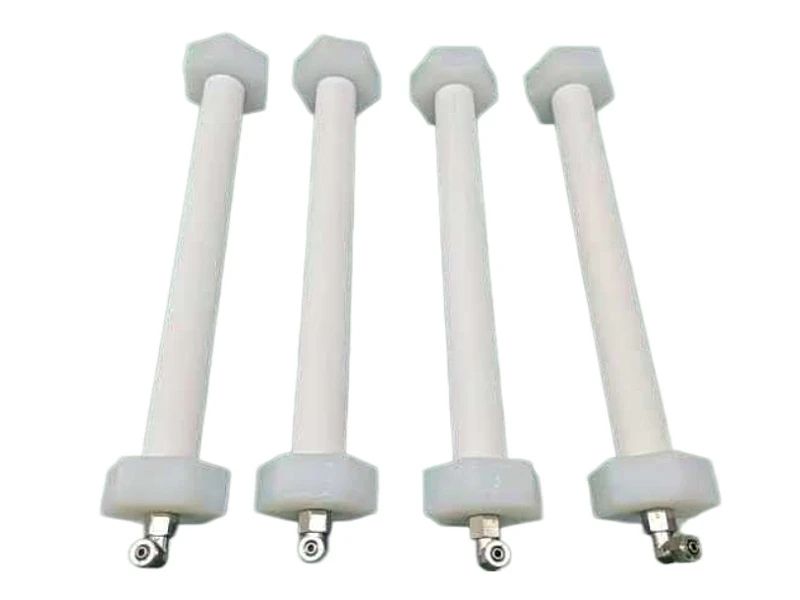
Nano-ceramic tubular diffuser
How to Choose Aquaculture Aeration System?
The selection of an aeration system is very important and is key to increasing yields in commercial aquaculture.
We typically select appropriate aquaculture aeration systems based on the following factors:
Contact us for support* Choose based on whether you are farming fish or shrimp.
* Choose based on the aquaculture system model.
* Choose based on whether it is a high-value aquaculture species.
* Choose based on the performance and price of the aquaculture aeration equipment.
Different aeration systems are chosen for fish farming and shrimp farming.

The focus of aeration systems for fish farming ponds
Because fish swim very fast, in aquarium systems, we focus more on the total aeration volume rather than the individual values at a single point in the fish farming pond.
Therefore, we need to choose aerators with high flow rates, such as root blowers or large ring blowers, combined with nano-aeration pipes and nano-aeration discs. This continuously generates a large number of small bubbles in the fish pond, which improves dissolved oxygen and air utilization efficiency.
✅This method improves air utilization by more than 70% compared to directly using perforated PVC pipes for aeration. This high-flow-rate air blower + nano-aeration pipe system is one of our recommended aeration systems.

The focus of aeration systems for shrimp farming ponds
Shrimp swim much slower than fish. In shrimp farming systems, while ensuring sufficient total population, we focus more on ensuring uniform aeration at every point in the shrimp pond.
Shrimp ponds are typically designed for a lower water depth, usually 80-110cm. The shallower the water, the lower the required aeration pressure. Shrimp ponds require less aeration pressure than fish ponds.For the same aeration volume, shrimp ponds require less pressure than fish ponds. At the same aeration volume, without considering higher pressure, a ring blower is more competitive than a root blower.
✅We highly recommend using a ring blower for shrimp pond aerators. This provides greater aeration in shallow water environments and is also less expensive and easier to install.
Choose an aeration system based on different aquaculture systems.

Air Blower Aeration System for Biofloc Fish and Shrimp Farming
Using the Biofloc Technology in aquaculture creates a relatively enclosed space that requires a large number of ammonia-oxidizing and nitrite-oxidizing bacteria (NOBs) to decompose ammonia nitrogen and nitrite in the fish or shrimp ponds.
Both nitrifying and nitrite-oxidizing bacteria are aerobic bacteria, and their rapid reproduction requires very high aeration rates.
In the Biofloc system, high-flow-rate ring blowers and root blowers are the best choices for aquaculture aeration systems.

Aeration System for Flow-Through Aquaculture System
- The Flow-Through system is an intensive land-based aquaculture system. In this system, we aim to achieve relatively higher yields with less land, and the yield can be stably controlled.
- Unlike Biofloc and Ras systems, the Flow-Through system does not use biological filtration. Therefore, we only need to focus on the dissolved oxygen level in the aquaculture tank.
- Furthermore, this system typically raises fish with low dissolved oxygen requirements, so a dissolved oxygen level of 5ppm-7ppm is sufficient.
We recommend two aeration systems for the Flow-Through system.
- For small-scale systems, a ring blower alone is sufficient. By designing a reasonable number of blowers and selecting appropriate end-of-line aeration accessories, the overall dissolved oxygen requirements of the fish and shrimp tanks can be met.
- For large-scale systems, we recommend using root blowers.
- Aquaculture-specific root blowers have advantages in high-power applications and can be equipped with inverters to save electricity.

Aeration System for RAS Systems
RAS systems are highly intensive aquaculture systems, often requiring high-density farming in a small space. The goal in these systems is yield per unit volume, or stocking density per cubic meter of water.
In RAS, the aquaculture aeration system comprises two parts:
- The first part provides oxygen to the fish and shrimp tanks, ensuring sufficient dissolved oxygen levels.
- The second part provides oxygen to the biological filtration system, similar to bioflocculation technology, as nitrifying and nitrite-oxidizing bacteria require more oxygen to thrive.
For RAS systems, we recommend only two aeration systems:
- For low-investment RAS systems, a root blower can be used alone. By carefully designing the piping and end-point air diffusers, the aeration needs of the tanks and biological filtration system can be met.
- For high-investment RAS systems, we recommend using an air system combined with a pure oxygen system.
- The air system is used for aeration in the biological filtration tanks; either a root blower or a ring blower can be selected depending on the scale.
- The pure oxygen system is used for aeration of the aquaculture tank and can stabilize the dissolved oxygen level to 7ppm-10ppm.
Selection of Aquaculture aeration systems for High-value species: Oxygen generator for Salmon farming
High-value species like salmon require high dissolved oxygen levels.
Salmon farming demands high dissolved oxygen levels in the water, ideally above 6 mg/L. Many high-density farms require dissolved oxygen levels of at least 9 mg/L. Like largemouth bass, salmon are carnivorous and can be farmed artificially and fed pelleted feed. Both require high dissolved oxygen levels, with artificial high-density farming environments needing 7-9 ppm.
Comparison of two types of oxygen machines for fish farming:
In our largemouth bass rasa farming project, we conducted a comparative experiment using two fish tanks, both at a stocking density of 60 kg/m³. One tank used a pure oxygen system throughout the entire process, while the other used an air system.
- Fish in the pure oxygen system reached 500g in 150 days, while those in the air system took 180 days.
- The vitality of the bass in the two different systems was also significantly different.
- The feed utilization rate of a pure oxygen system is almost 100%.
Recommended Use of Pure Oxygen Systems:
For high-value aquaculture species, we highly recommend using a pure oxygen generator paired with nano-ceramic discs to maintain a stable high level of dissolved oxygen in the water.
Advantages of Pure Oxygen Generator + Nano-Ceramic Discs:
- Simple installation: Installation can be completed by only 1-2 people.
- Flexible control: The total oxygen flow rate for each fish tank can be controlled individually, as can the flow rate of each ceramic aeration disc.
- Energy saving: At different stages of fish and shrimp farming—seedling stage, growth stage, and maturity stage—the oxygen requirements vary for the same stocking quantity. We can save electricity by flexibly adjusting the oxygen flow rate.
- Biological isolation: Biological isolation is crucial for the future development of aquaculture. Each aquaculture tank can use an independent filtration and oxygenation system. This aeration method is one of the basic requirements for an independent RAS unit.
Other Aeration and Oxygen Control for Aquaculture: Pure Oxygen Generator + Oxygen Cone Aquaculture:
- This is a traditional pure oxygen connection method. Oxygen and water are pressurized and mixed inside the oxygen cone, and finally delivered to each aquaculture tank by the circulation system. We do not recommend using this method:
- Lack of Flexible Control
This method is like a large system where the flow rate of the entire system is pre-designed. If I adjust the overall value, it will affect all aquaculture tanks. - No Bioisolation
A series-connected aquaculture system cannot achieve bioisolation, making it easy for bacteria and viruses to spread. - Higher Energy Consumption
Oxygen cone aquaculture requires the addition of high-power circulation pumps and pressurization pumps. We can completely convert this energy consumption to the oxygen generator itself.
Our engineers’ evaluation of various aerators for aquaculture.
We analyzed the aerators from four aspects: production cost, operating noise, aeration flow rate, and dissolved oxygen utilization rate.
When selecting aquaculture aeration systems, you need to consider these four factors along with your current situation. This will allow you to find the most ideal solution.
Production Cost
Operating Noise
Aeration Flow Rate
Utilization Rate


Production Cost

Operating Noise

Aeration Flow Rate
Oxygen Utilization Rate
- Production cost: Lowest.
- Operating noise: Within acceptable limits; no separate soundproof room is needed in suburban areas.
- Oxygen utilization rate: Direct aeration into the water results in low utilization; it requires the use of aeration diffusers or discs.
- Installation difficulty: Very easy to install; 1-2 people can complete the installation.
- Daily management: Almost no maintenance required; only moisture protection is needed.
- Suitable scenarios: Industry pilot projects or small-scale operations.
- Disadvantages: Not suitable for water depths exceeding 1.8m or large-scale aquaculture projects.

Production Cost

Operating Noise
Aeration Flow Rate
Oxygen Utilization Rate
- Production cost: Moderate.
- Operating noise: High; requires a separate soundproof equipment room.
- Oxygen utilization rate: Roots blower aquaculture aeration systems require specialized piping and aeration fitting design.
- Installation difficulty: Requires relatively skilled electricians and plumbers.
- Daily management: Requires regular maintenance.
- Suitable scenarios: Large-scale or bioflocculation, flow-through aquaculture systems.
- Disadvantages: Noise and maintenance costs.

Production Cost
Operating Noise
Aeration Flow Rate
Oxygen Utilization Rate
- Production cost: Relatively high.
- Operating noise: Quiet, almost no impact.
- Oxygen utilization rate: Equipped with a dedicated nano-ceramic disc for pure oxygen, resulting in smaller bubbles and an oxygen content exceeding 90%, making it easier to increase dissolved oxygen levels in the water.
- Installation difficulty: Simple installation, requiring only 1-2 people.
- Daily management: Requires regular maintenance of the oxygen generator module, air compressor, filter cotton, etc.
- Suitable scenarios: RAS systems or high-value pilot projects.
- Disadvantages: Requires use in conjunction with an air system in RAS systems.
Professional Aquaculture Aeration System Supply
TOP AQUACULTURE BLOWER SUPPLY IN CHINA
Do you want to design an aquaculture aeration system that suits your aquaculture business? FutureRas, a leading aquaculture equipment manufacturer in China, is the ideal choice.
We have our own PSA oxygen generator production line. To better suit the characteristics of aquaculture aeration systems, we also collaborate with two large blower manufacturers. Based on their existing ring blowers and root blowers, we have customized a series of models specifically for the aquaculture industry.
These specially designed blower models are designed to meet all usage scenarios in aquaculture. Furthermore, we have long-term cooperation agreements to provide fair-price aquaculture blowers.
Contact us today to learn more about our aquaculture aeration systems and customize your aquaculture blower.

Economical Pricing Options

CE SABER BV ISO9001

Excellent pre-sales and after-sales service
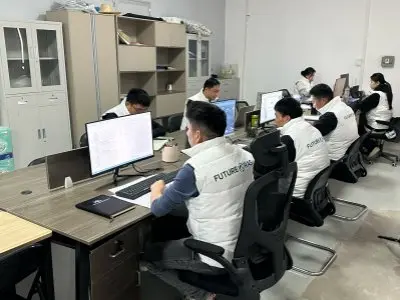
PSA Oxygen Generator Manufacturer

Multiple models display

Oxygen generator trial operation

Pre-shipment inspection

Wooden crate packaging
Other Recommended

Aquaculture Tanks

Modular Aquaculture System
Guide Collection on Aquaculture Aeration Systems
Importance of Dissolved Oxygen In Aquaculture
Fish and shrimp consume oxygen in water. In nature, this is a balanced state.
However, in aquaculture, we need to increase production to achieve economic benefits.
More fish and shrimp require more dissolved oxygen in the water, necessitating the addition of aquaculture aeration systems.
In commercial aquaculture, we typically use aerators to increase dissolved oxygen. Aerators are divided into air aerators and pure oxygen generators, which produce air and pure oxygen, respectively, then deliver these gases into the water through pipes and air diffusers.
Choosing suitable aquaculture aeration systems is crucial:
1. Increased production and improved aquaculture efficiency.
Traditional outdoor fish ponds without aeration systems generally have stocking densities below 10 kg/m³, while modern aquaculture using air aeration systems can easily reach 30 kg/m³, and with pure oxygen systems, even exceeding 100 kg/m³.
2. Improved feed utilization and reduced production costs.
In low-oxygen environments, the appetite of fish and shrimp decreases. When we feed fish, a significant amount is wasted, sometimes exceeding 50%. This wasted feed not only increases costs but also further pollutes the water.
Using an aeration system, while increasing electricity costs, improves feed utilization to over 90%.
3. Reduces fish disease incidence and simplifies aquaculture.
In low-oxygen environments, fish and shrimp are unhealthy, making them more susceptible to diseases like water mold, intestinal diseases, and respiratory illnesses.
Using aquaculture aeration systems maintains dissolved oxygen levels within a suitable range, greatly increasing the activity of fish and shrimp. Many diseases are even prevented from occurring.
Answers to Common Queries about Aquaculture Aeration Systems
Below are some common questions about our aeration systems. If you don’t find the answer you’re looking for, feel free to contact our team for detailed technical support and customized solutions.
Can you help me design the entire aeration system?
Yes, we can design a complete aquaculture aeration system based on your aquaculture scale, species, budget, etc.
Can you customize aquaculture air blower and oxygen generator models?
Yes, we can customize according to your required aeration rate, water depth, voltage, etc.
Can you design a aeration system based on RAS system and flow-through systems?
We are a professional designer and manufacturer in the field of aquaculture, and can customize complete aquaculture solutions.
Can you help me with the transportation of aquaculture tanks?
Yes, we can help you choose the appropriate shipping method based on the quantity.
We cooperate with freight forwarders for FCL, LCL, DDP, and air freight.
Can I wholesale aquaculture blowers?
We support distributors in every country. If you are in the aquaculture equipment business locally, please contact us.