

Air-cooled Ozone Generator for Aquaculture

The air-cooled ozone generator is suitable for small-scale aquaculture systems or applications involving infrequent use; the ambient operating temperature must not exceed 45°C.
Water-cooled Ozone Generator for Aquaculture

The water-cooled ozone generator is suitable for large-scale aquaculture systems or applications involving high-frequency usage, and is free from environmental constraints.
Integrated ozone generator for koi pond

Our integrated ozone generator is specifically designed for koi ponds and small Recirculating Aquaculture Systems (RAS). Featuring a built-in O₃-water mixer and utilizing a dedicated diffuser, it offers simple installation and ease of use.

Lower power consumption
✅ 100 g/h Plate-Type — Total Power Consumption: 1800 W/h
❌ 100 g/h Tubular — Total Power Consumption: 2400 W/h
Detailed Introduction
Energy consumption is the most critical metric for ozone generators.
- Operation at higher frequencies: Ozone is generated exclusively during the voltage rise phase of the high-voltage AC cycle; consequently, the higher the operating frequency, the greater the efficiency of ozone generation.
- Smaller ionization gaps: A narrow ionization gap necessitates a lower ionization voltage, and a reduced ionization voltage translates directly into lower electricity consumption.
- Shorter gas ionization distances: Within the ionization chamber, the generation of ozone occurs simultaneously with its decomposition. Given a specific target ozone concentration, a shorter gas residence time minimizes the additional energy expenditure associated with ozone decomposition.
Higher O₃ concentration
✅ I00 g/h Plate-Type — Ozone Concentration: 140–300 mg/L
❌ 100 g/h Tubular— Ozone Concentration: 80–120 mg/L
Detailed Introduction
- In the context of using ozone generators for aquaculture water treatment, ozone concentration is of paramount importance; the higher the gaseous ozone concentration, the greater the efficiency of heterogeneous mass transfer and oxidation, and the lower the oxygen consumption.
- Our plate-type ozone generators achieve higher ozone concentrations by increasing the ratio of ionization surface area to ionization volume, employing high ionization frequencies, and utilizing highly efficient cooling systems.
Lower Performance Degradation
✅ 100 g/h Plate-Type — Annual decay rate: 1%–3%
❌ 100 g/h Tubular — Annual decay rate: 7%–15%
Detailed Introduction
- The ionization chambers of glass-tube ozone generators contain extensive stainless steel surfaces; corrosion of these surfaces within the chamber leads to a significant reduction in ozone generation efficiency.
- In contrast, our company’s plate-type ozone generators feature no stainless steel—or any other corrosion-prone materials—within their ionization chambers; consequently, both ozone output and production efficiency remain stable.
✅ Plate-Type — Annual decay rate: 1%–3%
3-Year Cumulative Degradation: 3%–8%
5-Year Cumulative Degradation: 5%–12%
Causes of Attenuation: Dielectric aging, slight electrode oxidation, seal aging
Characteristics: Extremely slow attenuation, long-term stability
❌ Tubular — Annual decay rate: 7%–15%
Energy consumption is the most critical metric for ozone generators.
3-Year Cumulative Degradation: 20%–38%
5-Year Cumulative Degradation: 30%–55%
Causes of Degradation:
Corrosion and scaling on the inner walls of the discharge tubes
Breakdown or aging of the dielectric layer
Failure of individual tubes, resulting in a decline in overall output
Gradual decrease in cooling efficiency over time
Sturdy and durable
✅ I00 g/h Plate-Type —Durability: High mechanical strength
❌ 100 g/h Tubular— Durability: Poor mechanical stability
Detailed Introduction
- In glass-tube ozone generators, the glass tubes are susceptible to breakage when subjected to bumps, improper maintenance procedures, or electromagnetic vibrations.
- Our company’s plate-type ozone generators feature an aluminum alloy exterior and contain no fragile internal components—such as glass tubes—thereby ensuring exceptionally high mechanical strength.
✅ Plate-Type: Very high mechanical strength
- The dielectric medium is subjected to uniform force, exhibiting strong resistance to deformation and vibration.
- Precision-assembled, it is highly resistant to deformation and electrical breakdown.
- The housing electrodes are constructed from aluminum alloy + ceramic or titanium alloy, offering robust resistance to ozone corrosion, dust, and moisture.
- Heat dissipation is uniform (with a temperature rise of only 3–5°C), resulting in minimal ozone decomposition and ensuring stable ozone concentrations during aquaculture water disinfection.
❌ Tubular: Poor mechanical stability
- Featuring a single-tube series configuration with unilateral water cooling, the system suffers from poor mechanical rigidity; vibrations can easily lead to tube loosening or cracking of the dielectric material.
- The discharge tubes are constructed from quartz or enamel, materials characterized by high brittleness and low resistance to mechanical shock and thermal expansion/contraction.
- The electrodes are predominantly made of stainless steel; prolonged exposure to an ozone-rich environment renders them susceptible to oxidation, scaling, and corrosion, ultimately resulting in discharge failure.
- Localized overheating accelerates the decomposition of ozone, leading to significant fluctuations in ozone concentration.
- Due to the series-connected architecture, the failure of a single tube results in a reduction in the output of the entire assembly, thereby accelerating overall performance degradation.
Less floor space
✅ 100 g/h Plate-Type — Overall Dimensions:65*50*143cm
❌ 100 g/h Tubular — Overall Dimensions:88*50*143cm
Detailed Introduction
- In aquaculture applications—particularly in highly intensive Recirculating Aquaculture Systems (RAS)—space is often at a premium. Consequently, utilizing equipment with a smaller footprint helps conserve space while still fully meeting operational requirements.
- Furthermore, given the frequent use of ozone generators within aquaculture RAS, a more compact size facilitates easier handling during routine daily operations.
Low Maintenance
✅ I00 g/h Plate-Type — Requires almost no daily maintenance.
❌ 100 g/h Tubular— Numerous maintenance tasks
Detailed Introduction
Ozone generators are frequently used as aquaculture disinfection equipment. If frequent maintenance is required, it will incur significant additional management and labor costs.
✅ Plate-Type: Simple Maintenance
- Requires virtually no daily attention
- Ready to use immediately upon startup; shuts down instantly
- Weekly / Monthly Maintenance Notes: Wipe dust off the machine chassis
Briefly check to ensure water temperature and air supply are normal - Consumable Parts: Virtually no standard consumable parts
- Maintenance Time: ≤ 20 minutes per month
❌ 100 g/h Tubular: Complex maintenance
- Requires Daily Monitoring
- Prone to gas leaks, water leaks, and unstable discharge.
- Requires Monthly Maintenance: Verify uniform discharge across individual tubes.Clean internal deposits and oxide layers. Inspect connector seals.
- Wear Parts
The discharge tubes, sealing gaskets, and connectors are all consumables.

Titanium Alloy Diffuser for Ozone Generator
Titanium alloy ozone diffusers are a traditional type of diffuser; however, due to the corrosive nature of ozone, standard diffusers would otherwise be susceptible to corrosion.
The ozone utilization rate is only 10–20%.
As the bubbles produced by titanium alloy diffusers are relatively large and have a short residence time in the water.
Learn moreContact us to design your aquaculture ozone disinfection system.

Nano-Jet Diffuser for Ozone Generators
The nano-jet diffuser is the latest type of diffuser; it converts ozone into much smaller “nano-bubbles” and, by utilizing a water pump to mix and propel the flow over greater distances, enables coverage of a significantly larger area.
A more efficient method than venturi ozone injection,The ozone utilization rate can reach 40–50%.
The ozone is dispersed into smaller nanobubbles and mixed with the water flow, allowing it to achieve a longer residence time within the water.
Learn moreContact us to design your aquaculture ozone disinfection system.

Dedicated Diffuser for Integrated Koi Pond Ozone Generator
This specialized diffuser is designed specifically for koi pond ozone systems. It features an integrated ozone generator with a built-in water and ozone mixer; the resulting ozonated water flows via diffusion into an intermediate tank, the water within which circulates in tandem with the main koi pond system.
The ozone utilization rate can reach 50–60%.
Ozone is mixed with water within a pressure vessel; the majority of it remains dissolved in the water, representing the most efficient method of ozone utilization currently available.
Learn moreContact us to design your koi pond ozone systems.

Integrated ozone generator– Ozone generator for RAS and koi ponds.

Featuring an integrated design, it requires no complex installation.
It is suitable for koi ponds and small-capacity fish ponds.
Our modular RAS system segments the entire aquaculture project into multiple smaller, individual units.
It is ideally suited for disinfection using an integrated ozone generator.
A specialized ozone mixer achieves higher ozone concentrations, while the use of a dedicated ozone contact tank ensures safe ozone levels for fish.

Air-cooled Ozone Generator for Aquaculture
The plate-type ozone generation module revolutionizes the method of ozone production, thereby enhancing its efficacy. Air-cooled models are suitable for the vast majority of aquaculture projects. Requiring no auxiliary cooling equipment, it is an energy-efficient ozone generator for aquaculture.
Multiple sizes are available, with the smallest being 5g, ideal for small-scale aquaculture or koi ponds. In non-tropical areas, larger aquaculture projects are also suitable.

Water-cooled Ozone Generator for Aquaculture
The water-cooled ozone generator utilizes an external chiller as a cooling system, ensuring that the entire unit’s operating temperature remains consistently within its most efficient range.
Its ozone concentration and output significantly exceed those of air-cooled models, making it ideally suited for large-scale aquaculture projects or applications requiring high-frequency operation.
Professional Aquaculture Ozone Disinfection System Supply
WHOLESALE AQUACULTURE SYSTEM OZONE MACHINE
Are you looking to design a safe and reliable, professional aquaculture ozone disinfection system? As a leading manufacturer of plate-type ozone generators in China, FUTURERAS is your ideal partner.
We are a professional aquaculture disinfection equipment supplier. Our plate-type ozone generator for aquaculture has been utilized in over 100 aquaculture projects and has received unanimous acclaim.
Welcome to contact us. Customize your aquaculture ozone disinfection system.

Exclusive Ceramic Plate Ozone Generator Module

Economical Pricing Options

CE SABER BV ISO9001

Excellent pre-sales and after-sales service
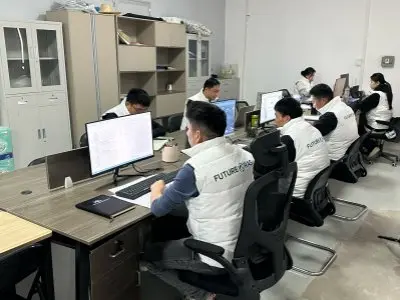
Plate-Type Aquaculture Ozone Generator Manufacturer

Assembly

Pre-shipment testing

Quality Inspection

Package
Guide Collection on Aquaculture Ozone Disinfection System
Why Choose a Plate-type Ozone Generator for Aquaculture?
In aquaculture ozone disinfection systems, the stability of the ozone generator is crucial.
The parallel ceramic plate ozone generator resolves numerous shortcomings associated with quartz-tube ozone generation technology.
Principle of Ceramic Plate Ozone Generators:
Ceramic Plate Dielectric Barrier Micro-gap Corona Discharge Technology.
A dense, uniform, and high-intensity blue-violet corona discharge is generated within the discharge gap. As the gas flows through the minute space between the dielectric medium and the high-voltage electrode, O₂ molecules are bombarded by a high-velocity stream of electrons; through mutual elastic collisions, they aggregate to form O₃ (ozone) molecules.
Technological Advancements in Ceramic Plate Ozone Generators
⬆️ Eliminates Quartz Tube Breakage
⬆️ Extended Lifespan of Ozone Generation Units
⬆️ Lower Power Consumption
⬆️ Higher O₃ Concentration
⬆️ More Compact Equipment Size
⬆️ Easier Maintenance

Quartz Tube Ozone Generator Module

Ceramic Plate Ozone Generator Module
FAQ for Plate-Type Aquaculture Ozone Disinfection System
Other related recommendations for Aquaculture Ozone

Independent Modular Aquaculture Filtration System
